Overview
The hand and wrist are made up of many small bones, tendons and ligaments that work together to give strength, grip and fine control.
When a tendon or ligament is suddenly torn, cut or stretched beyond its limit, it can cause pain, swelling and loss of movement. These injuries are common after falls, sporting accidents or cuts from sharp objects.
Because the tendons and ligaments of the hand and wrist are so delicate and essential for everyday movement, early assessment and treatment are very important.
Early surgical repair often gives the best chance of full recovery.
What are tendons and ligaments?
- Tendons connect muscle to bone. When a muscle contracts, the tendon pulls on the bone and makes it move.
- Flexor tendons bend the fingers and wrist.
- Extensor tendons straighten them.
- Ligaments connect bone to bone. They act like strong elastic bands that keep the wrist bones in place and stop the joint from moving too far.
If a tendon snaps or is cut, you lose the ability to move the affected finger or thumb. If a ligament tears, the joint can become unstable and painful.
How do these injuries happen?
Acute tendon and ligament injuries usually occur suddenly. Common causes include:
- A cut from a knife or broken glass – often damaging tendons on the palm or back of the hand.
- A fall onto an outstretched hand – can stretch or tear wrist ligaments (such as the scapholunate ligament or TFCC Triangular fibrocartilage complex).
- Sporting injuries – sudden force or impact (for example, a rugby tackle or cricket ball impact).
- Crushing or twisting injuries – such as getting the hand caught in machinery or a door.
These acute injuries are different to injuries that have developed over time (chronic injuries) – read more about these here.
Who is at higher risk?
Anyone can suffer these injuries, but they’re more common in:
- People who play contact or ball sports.
- Manual workers who use their hands for heavy or repetitive tasks.
- Individuals with poor protective hand equipment at work or sport.
- People with previous hand or wrist injuries.
Signs and symptoms
The symptoms depend on which structure is damaged but may include:
- Sudden pain and swelling after an injury.
- Loss of movement – for example, you can’t bend or straighten a finger.
- Weakness or “giving way” of the wrist – dropping objects
- Bruising or deformity around the injured area.
- Clicking, catching or a gap where the tendon has retracted.
- An open wound that may expose underlying tissue.
If you are unable to move your finger or wrist properly after an injury, or you have a deep cut, you should seek medical help urgently.
How the injury is assessed and diagnosed
At London Bridge Orthopaedics, your hand and wrist specialist will:
- Take a detailed history – they will ask questions about how the injury happened, what symptoms you have, and any previous problems.
- Examine your hand and wrist – during your examination they will check movement, strength, swelling and sensation.
- For tendon injuries, we test each finger’s movement to find which tendon is affected.
- For ligament injuries, we may perform gentle stress tests to check for joint instability.
- Order imaging if needed, such as:
- X-rays – to check for fractures or bone avulsion (where a small piece of bone pulls off).
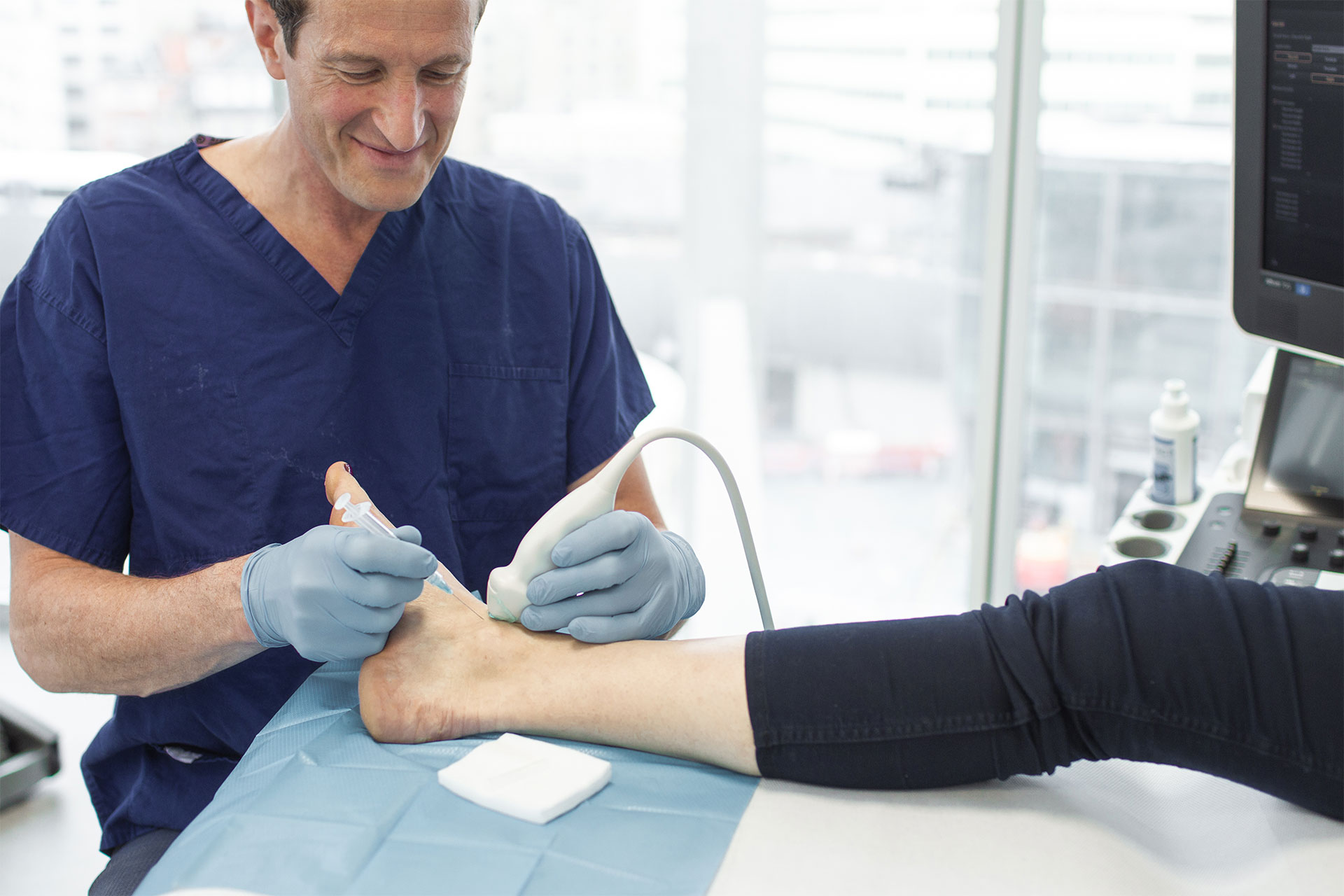
- Ultrasound – these are an excellent way to look for tendon tears.
- MRI or MR arthrogram – to view ligaments, cartilage and soft tissue injuries in greater detail.
Treatment options
Non-surgical (conservative) care
Some partial tears or small ligament injuries can be treated without surgery.
- Splint or cast – this keeps the injured area still while healing begins.
- Pain relief – simple painkillers and anti-inflammatory medication may be prescribed if suitable.
- Elevation and rest – to reduce swelling.
- Hand therapy – we will refer you for guided exercises from a specialist hand therapist to regain movement once healing allows.
Surgical repair
Surgery is often needed when:
- A tendon or ligament is completely torn or cut.
- There is significant loss of movement or function.
- The injury involves an open wound.
Common procedures
- Tendon repair – the surgeon will carefully stitch the torn tendon ends together.
- Ligament repair or reconstruction – damaged ligaments can be reattached or reinforced.
- TFCC repair – this is a more complex surgical procedure to repair the Triangular fibrocartilage complex. These are wrist ligament tears causing instability on the little-finger side of the wrist.
Repairs are usually done under regional or general anaesthetic. Early movement, under supervision of a hand therapist, significantly improves recovery and outcomes.
Recovery and rehabilitation
After surgery, you’ll wear a splint or cast to protect the repair.
- Early stage (first few weeks): focus on wound care, swelling control and gentle, protected movement.
- Intermediate phase (3–6 weeks): your therapist will guide gradual exercises to improve movement.
- Later phase (6–12+ weeks): strength training begins, aiming for normal use of the hand and wrist.
Full recovery can take several months depending on the type of injury and repair.
Prognosis and outcomes
- With early management and treatment plus specialist rehabilitation, most patients regain good movement and strength.
- Delayed treatment can lead to stiffness, scarring or reduced hand function.
- Some severe or complex injuries may not recover full power but usually allow good day-to-day use and function.
When to seek urgent help
You should seek urgent medical attention if:
- You have a deep cut to your hand or wrist.
- You cannot bend or straighten a finger or thumb after injury.
- Your wrist feels unstable or has a sudden loss of power.
- You notice numbness, tingling, or pale/blue fingers after trauma.
FAQs
- How do I know if I’ve torn a tendon or ligament in my wrist or hand?
If you can’t bend or straighten your finger, or your wrist feels unstable after an injury, you may have a tendon or ligament tear. A specialist assessment and ultrasound or MRI scan can confirm this.
- Do all tendon or ligament injuries need surgery?
Not always. Partial tears or minor ligament injuries can often heal with splinting and physiotherapy. Complete tears usually need surgical repair to restore function.
- How long does recovery take after tendon or ligament repair surgery?
Most patients return to normal daily activities within 8–12 weeks, but full recovery of strength can take up to six months with proper hand therapy.
- When should I see a hand and wrist specialist?
You should seek an orthopaedic review immediately if you have an open wound, sudden loss of movement, or wrist instability following injury. Early treatment gives the best results.
- What are the benefits of seeing a specialist at London Bridge Orthopaedics?
Our team includes experienced hand and wrist surgeons who provide rapid diagnosis, advanced imaging, surgical repair and expert rehabilitation – all in one place for the best possible recovery.
References (Harvard style)
- NHS (2023). Tendon injuries. Available at: https://www.nhs.uk/conditions/tendon-injury/ (Accessed 10 October 2025).
- British Society for Surgery of the Hand (BSSH). Flexor tendon injury – patient information. Available at: https://www.bssh.ac.uk/patients (Accessed 10 October 2025).
- Ng, A.W.H. et al. (2017). ‘MR imaging of the traumatic triangular fibrocartilaginous complex’, Quantitative Imaging in Medicine and Surgery.
- Andersson, J.K. et al. (2017). ‘Treatment of scapholunate ligament injury: Current concepts’, Journal of Wrist Surgery.