As we enter the early part of the new year, many elective operations are scheduled, and this makes January to March the perfect time to lay the groundwork for a successful recovery. If you are preparing for a hip or knee replacement, engaging in what’s known as prehabilitation – the process of optimising your health, strength and mobility before surgery – can significantly help your outcomes.
In this article we will cover:
- Which types of lower limb joint replacement surgery are commonly offered (hip/knee/ankle) and who may need them
- Why prehabilitation really matters: benefits for recovery time and long-term results
- Key prehab strategies: strength & mobility work, nutrition, lifestyle factors
- A realistic recovery timeline and how LBO supports you throughout
Types of Joint Replacement Surgery: What LBO Offers and Who Might Need It
At London Bridge Orthopaedics (LBO), we provide a comprehensive range of joint replacement procedures, covering hip, knee and ankle surgery; from first-time replacements to complex revision cases.
- Total Hip Replacement (THR)
Typically recommended for severe osteoarthritis, avascular necrosis, or significant cartilage loss that limits mobility and quality of life.
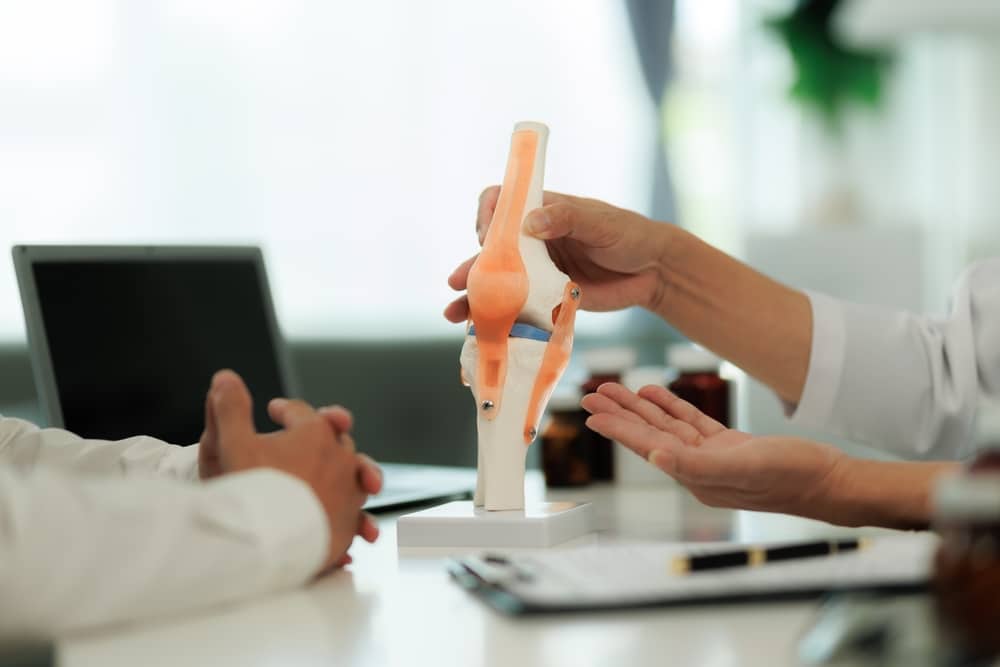
- Total Knee Replacement (TKR)
Offered when multi-compartment knee arthritis results in persistent pain, stiffness, bone damage, and functional restriction.
- Partial (Unicompartmental) Knee Replacement (PKR)
Ideal for patients with arthritis isolated to one compartment of the knee joint. PKR preserves more healthy bone and ligaments, allowing a faster, more natural recovery and improved joint proprioception.
- Total Ankle Replacement (TAR)
An increasingly popular option for patients with end-stage ankle arthritis due to osteoarthritis, inflammatory arthritis, or post-traumatic degeneration. Ankle replacement preserves joint motion more effectively than ankle fusion, improving gait and reducing strain on neighbouring joints. Suitable candidates typically have good bone quality, stable ligaments, and alignment that can be corrected surgically if needed.
- Revision Joint Replacement
Required when a previous hip, knee, or ankle implant wears out, loosens, becomes infected, or fails mechanically. Revision surgery is more complex and requires specialist surgical expertise, advanced planning, and coordinated post-operative rehabilitation.
You may be a candidate for joint replacement if:
- Your pain persists despite extensive physiotherapy, injections, medications and lifestyle modifications.
- Symptoms limit walking, stairs, work, or leisure activities
- Imaging confirms advanced joint degeneration
- Your quality of life is being impacted
Why Prehabilitation Matters: Evidence for Hip, Knee and Ankle Replacement Success
Traditionally, orthopaedic surgery has focused on what happens during and after the operation.
However, prehabilitation is increasingly recognised as a powerful tool that improves outcomes regardless of whether you are having a hip, knee or ankle replacement; including partial and revision procedures.
Patients preparing joint replacement surgery benefit from:
- Cardiovascular conditioning
- Improving joint mobility
- targeted muscle strengthening and endurance training
- Functional rehabilitation
- Balance and proprioceptive training
- Gait analysis and retraining
The Evidence Base
Research supports that patients who engage in preoperative exercise programmes before joint replacement surgery experience:
- Shorter hospital stays
- Improved post-op function with quicker recovery
- Smoother post-operative gait normalisation
- Reduced falls risk
- Better pain management
- Overall improved quality of life
The message is clear: by entering surgery in better shape, you give your body a head-start. Stronger, fitter patients recover faster – across hip, knee and ankle procedures.
Prehabilitation Strategies: Strength, Nutrition, Lifestyle & Mental Preparation
Here’s a breakdown of the key components of a smart prehabilitation plan ahead of hip or knee replacement surgery:
Strength & Mobility Exercises
Focus on building muscular strength around the joint, and throughout the lower limbs. Improve joint mobility, balance and proprioception.
You need to work closely with a physio our experienced trainer to make sure you are using the correct technique and progressing appropriately.
Aim for at least 2 – 3 prehab sessions per week, for 4 – 6 weeks pre-surgery if possible. Research indicates that interventions delivered for 4 – 6 weeks (or more) show better functional gains.
Nutrition & Weight Optimisation
Weight management is crucial: excess body weight increases load on the joint and the implant, and may slow recovery. Ensure adequate protein intake (to support muscle repair) and consider micronutrient status (vitamin D, iron, etc). If you smoke or have poorly controlled chronic disease (diabetes, hypertension), address these ahead of surgery – better general health means fewer complications.
Lifestyle Factors: Sleep, Alcohol, Stress
Good sleep supports recovery and immune function. Address sleep hygiene, and aim to minimise alcohol consumption in the months leading up to surgery. Work with your surgeon or GP to optimise any contributing conditions.
Gait & Functional Training
Improve practical mobility tasks that you’ll do after surgery – stair climbing, sit-to-stand, walking on uneven ground. At LBO, we incorporate functional assessments so you’re ready for the real world.
Mental Preparation
Developing positive mental preparation helps too. Visualise your goals, understand the timelines for recovery and set realistic expectations.
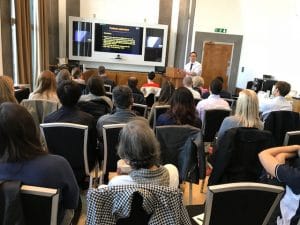
Join educational sessions and ask lots of questions to know what to expect before, during and after your hospital stay.
What to Expect: Recovery Timeline & LBO Support
Here is a typical recovery timeline following a hip or knee replacement, and how LBO supports you at each stage.
Pre-operative phase (4 – 6 weeks before surgery)
- Meet your orthopaedic surgeon and physiotherapist at LBO
- Undertake baseline strength, mobility and functional assessment
- Begin your prehabilitation programme (onsite, or with your preferred physio)
- Establish nutritional, lifestyle and sleep baseline
- Receive educational briefing on surgery, discharge, rehabilitation
Day 0-2 (Surgery & immediate post-op)
- Mobilise with assistance on the same day or next day
- Physiotherapist visits daily; pain and wound management initiated
- Safe discharge planning begins
Weeks 1-4 (Early recovery)
- Outpatient or home physiotherapy continues. At LBO we can offer onsite physio at our London Bridge (Shard) location so you can conveniently attend the same clinic as your surgical team.
- Functional goals: walking with crutches or frame, stairs, gentle strengthening
- Monitor wound and implant feedback; optimise pain & swelling control
Weeks 4-12 (Intermediate recovery)
- Progress to more demanding strengthening, agility, balance, and gait retraining
- Focus on independence, return to everyday activities and moderate exercise
- Nutrition and lifestyle behaviours continue to support healing
Months 3-12 (Long-term recovery)
- Many patients reach 80-90% of their functional improvement by 6-12 months
- Return to low-impact sports or fitness activities (depending on implant and advice)
- Ongoing physiotherapy or gym-based strengthening may be needed
Why choose LBO for your lower limb joint replacement?
At London Bridge Orthopaedics we provide a comprehensive joint replacement service built around you.
Whether you are undergoing hip, knee, ankle or revision surgery, LBO provides coordinated, specialist care. We work with expert physiotherapists pre and post op within the hospital, which ensures seamless surgeon – physio collaboration, and can also work with your preferred external physiotherapist for ongoing outpatient rehab.
Our prehabilitation philosophy means you enter surgery in the best shape possible, making recovery faster and outcomes better.
Our goal is to ensure a smooth, safe and efficient pathway from prehab to full recovery.
References
Omar, I., Wylde, V., Fogg, J., Whitehouse, M. and Bertram, W., 2025. Pre-operative education and prehabilitation provision for patients undergoing hip and knee replacement: a national survey of current NHS practice. BMC Musculoskeletal Disorders, 26(1), p.421.
Punnoose, A., Claydon-Mueller, L.S., Weiss, O., Zhang, J., Rushton, A. and Khanduja, V., 2023. Prehabilitation for patients undergoing orthopedic surgery: a systematic review and meta-analysis. JAMA network open, 6(4), pp.e238050-e238050.