Plantar fasciitis is one of the most common causes of heel pain. It occurs when the plantar fascia – a thick band of connective tissue running along the sole of the foot from the heel bone to the toes, becomes overloaded and painful.
Despite the name, plantar fasciitis is not always an inflammatory condition. In many people, particularly when symptoms have been present for several months, it represents a degenerative or overload-related condition of the plantar fascia, sometimes referred to as plantar fasciopathy.
The plantar fascia plays a key role in supporting the arch of the foot and absorbing forces during walking, running and standing. Repetitive strain or excessive load can lead to micro-damage within the tissue, resulting in pain and stiffness.
Who gets plantar fasciitis?
Plantar fasciitis can affect people of all ages and activity levels.
It is commonly seen in:
Runners and individuals involved in high-impact sports
People who spend long periods standing or walking, particularly on hard surfaces
Middle-aged adults
Individuals who have recently increased their activity levels
Those with certain foot biomechanics or footwear issues
It may affect one or both feet, although symptoms are more commonly felt on one side.
Predisposing and risk factors
A number of factors can increase the risk of developing plantar fasciitis. These include foot structure, activity patterns and lifestyle factors.
Common predisposing factors include:
Reduced ankle flexibility or tight calf muscles
Flat feet or high arches
Poor foot biomechanics or altered gait
Sudden increase in training volume or intensity
Prolonged standing or walking at work
Running on hard surfaces
Inappropriate or worn footwear with inadequate support
Excess body weight, which increases load through the plantar fascia
Often, plantar fasciitis develops as a result of a combination of factors rather than a single cause.
Symptoms of plantar fasciitis
The hallmark symptom of plantar fasciitis is heel pain, usually felt on the underside of the heel, slightly towards the inner side.
Typical symptoms include:
Sharp or aching pain under the heel
Pain that is worse with the first steps in the morning or after rest
Stiffness in the sole of the foot
Pain that improves slightly with movement but worsens again after prolonged activity
In some cases, pain may radiate along the arch of the foot.
Assessment at London Bridge Orthopaedics
At London Bridge Orthopaedics, assessment begins with a detailed clinical consultation. Your specialist will take a thorough history, including symptom onset, activity levels, footwear and occupational demands.
Clinical examination typically focuses on:
Localised tenderness over the plantar fascia insertion
Foot posture and biomechanics
Ankle and calf flexibility
Gait and functional movement patterns
This comprehensive assessment helps identify contributing factors and guides an individualised treatment plan.
Diagnosis of Plantar Fasciitis
Plantar fasciitis is usually diagnosed clinically based on your history and examination findings.
Imaging is not always required but may be recommended in certain cases, particularly if symptoms are persistent or atypical. Investigations may include:
Ultrasound scanning, which can show thickening or changes within the plantar fascia
MRI scanning, used if there is diagnostic uncertainty or to exclude other causes of heel pain
Imaging can also help guide treatment decisions in more complex or long-standing cases.
Differential diagnosis
Several other conditions can cause heel pain and may need to be considered during assessment. These include:
Plantar fascia tear
Fat pad irritation or atrophy
Stress fracture of the calcaneus (heel bone)
Tarsal tunnel syndrome (nerve compression)
Inflammatory arthropathies, such as rheumatoid arthritis
Accurate diagnosis is essential to ensure appropriate treatment.
Expert Plantar Fasciitis Treatment at London Bridge Orthopaedics
Treatment for plantar fasciitis is usually successful, but it often requires patience and a structured approach. Most people improve with conservative management.
Conservative treatment
First-line treatment focuses on reducing load through the plantar fascia and addressing contributing factors. This may include:
Activity modification and load management
Stretching programmes targeting the calf muscles and plantar fascia
Strengthening exercises for the foot and lower limb
Footwear advice and activity-specific shoe modifications
Insoles or orthoses to support the arch and improve biomechanics
Physiotherapy-led rehabilitation
Conservative treatment is effective for the majority of patients, particularly when followed consistently.
Medical treatments
If symptoms persist despite appropriate conservative care, additional medical treatments may be considered.
These may include:
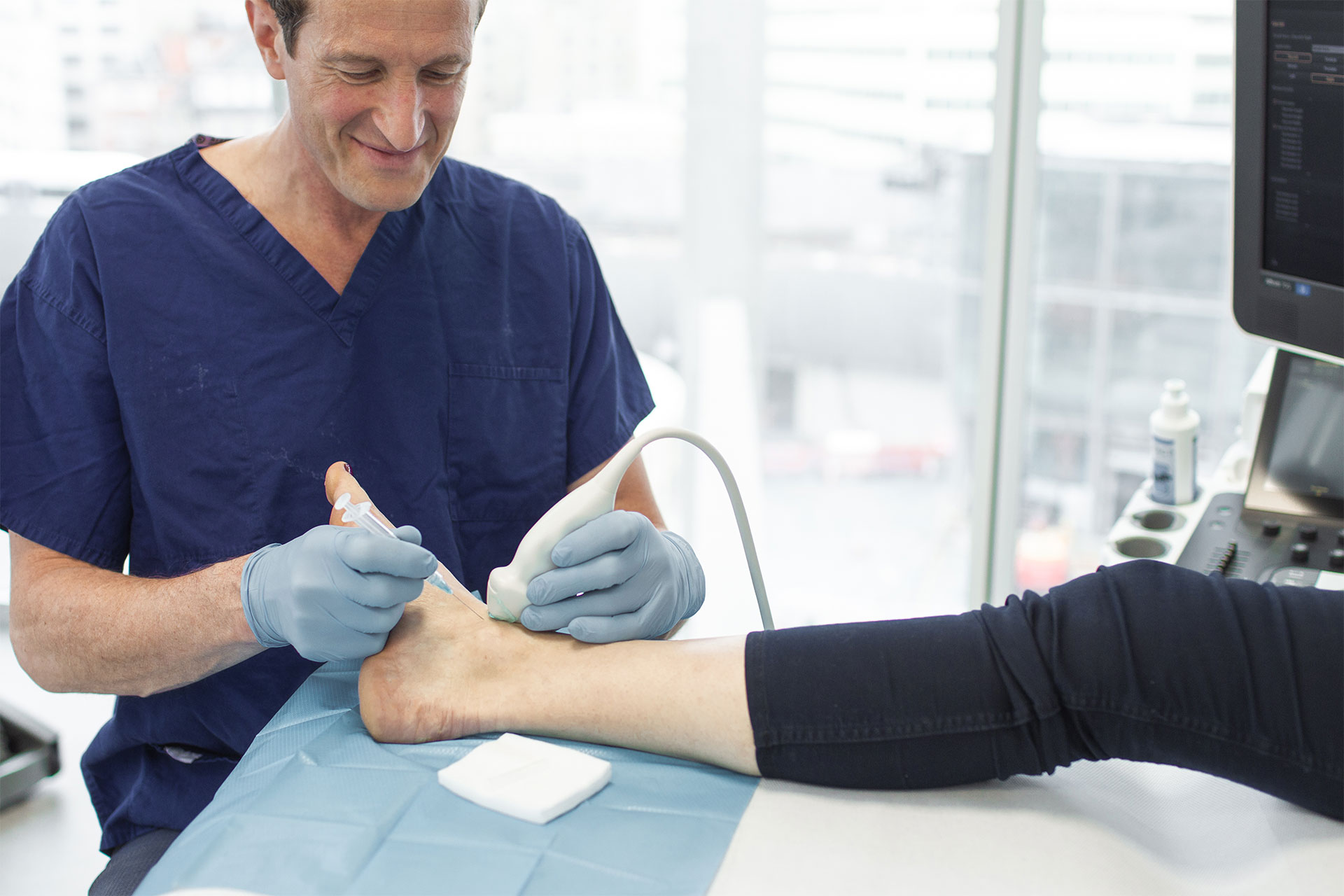
Corticosteroid injections, used selectively to reduce pain and inflammation, often performed under ultrasound guidance for accuracy
Shockwave therapy, which can stimulate tissue healing in chronic cases
Your specialist will discuss the potential benefits and risks of these options in detail.
Surgical treatment
Surgery for plantar fasciitis is rarely required and is only considered when symptoms have failed to improve after prolonged, comprehensive non-surgical treatment.
Surgical options may involve partial release of the plantar fascia. This is carefully considered and only recommended in selected cases, as most patients improve without surgery.
Outcomes and recovery
The outlook for plantar fasciitis is generally very good. With appropriate treatment, most people experience significant improvement over time.
Recovery can take several months, particularly in long-standing cases, and symptoms may fluctuate during rehabilitation. Early assessment, accurate diagnosis and a tailored treatment plan can help optimise recovery and reduce the risk of recurrence.
At London Bridge Orthopaedics, our multidisciplinary team works closely with you to ensure a safe, effective and evidence-based approach to managing plantar fasciitis and supporting your return to normal activities.
London’s Leading Specialist Orthopaedic Consultants
We are a group of established consultants who care about our patients. We cover all the subspecialty areas of orthopaedics:
Up to 40% of ankle sprains develop persistent symptoms. Learn how to identify the commonly missed diagnoses, clinical examination techniques, red flags and appropriate referral pathways for chronic ankle pain.