What is ankle osteoarthritis?
The ankle joint (talocrural joint) is a hinge joint formed by three main bones.
- tibia (shin bone)
- fibula (calf bone)
- talus (ankle bone).
The tibia and fibula form a socket that sits on top of the talus, allowing for up-and-down movement (dorsiflexion and plantarflexion).
Ankle osteoarthritis (OA) is a degenerative joint condition that affects the cartilage in the ankle joint. Cartilage is the smooth, protective layer that covers the ends of bones, allowing pain-free movement. In osteoarthritis, this cartilage becomes worn or damaged, leading to pain, stiffness, and reduced mobility.
While ankle osteoarthritis is less common than hip or knee osteoarthritis, it can have a significant impact on daily activities, particularly walking, standing, or participating in sports.
Who gets ankle osteoarthritis?
Ankle osteoarthritis can develop as a result of age-related wear and tear or following previous ankle injuries, such as fractures or ligament injuries.
Risk factors include:
- Previous ankle trauma or fractures
- Chronic ankle instability or repeated sprains
- Long-standing inflammatory conditions, such as rheumatoid arthritis
- Overuse from high-impact sports or occupations that involve prolonged standing
- Age-related degeneration
Symptoms of Ankle OA
Common symptoms include:
- Persistent ankle pain, particularly with activity or at the end of the day
- Stiffness, especially in the morning or after periods of rest
- Swelling around the ankle joint
- Reduced range of motion
- Occasional creaking or grinding sensation in the joint
Symptoms often progress gradually but can significantly affect mobility and quality of life.
Aggravating factors
Activities that increase load or stress on the ankle can worsen symptoms, such as:
- Walking or standing for long periods
- High-impact sports such as running or football
- Uneven surfaces or inclines
- Wearing unsupportive footwear
Expert Assessment for Ankle Osteoarthritis
At LBO, ankle osteoarthritis is assessed through a detailed consultation, which includes:
- A thorough history of your symptoms, previous injuries, and activity levels
- Physical examination of the ankle and surrounding joints
- Assessment of gait, balance, and joint mobility
- Imaging such as X-rays, CT scans, or MRI to evaluate cartilage damage, bone changes, and alignment
This comprehensive assessment helps determine the most appropriate treatment plan, whether conservative or surgical.
Diagnosis of Ankle OA
Diagnosis is typically made based on your history, clinical examination, and imaging studies. X-rays can show joint space narrowing, bone spurs, or other changes associated with osteoarthritis. MRI or CT may be used for more detailed assessment, particularly if surgery is being considered.
Differential diagnosis
Other conditions can mimic ankle osteoarthritis, and your specialist will consider:
- Ligament or tendon injuries
- Inflammatory arthritis (such as rheumatoid arthritis)
- Post-traumatic arthritis following fracture
- Nerve-related ankle pain
Treatment options for Ankle OA
Treatment for ankle osteoarthritis is tailored to each patient, depending on symptom severity, lifestyle, and the degree of joint damage.
Conservative treatment options
Conservative options are often tried first and include:
- Activity modification to reduce stress on the ankle
- Analgesics or anti-inflammatory medications
- Physiotherapy to maintain ankle strength, flexibility, and balance
- Supportive footwear or custom orthotics to improve alignment and reduce load
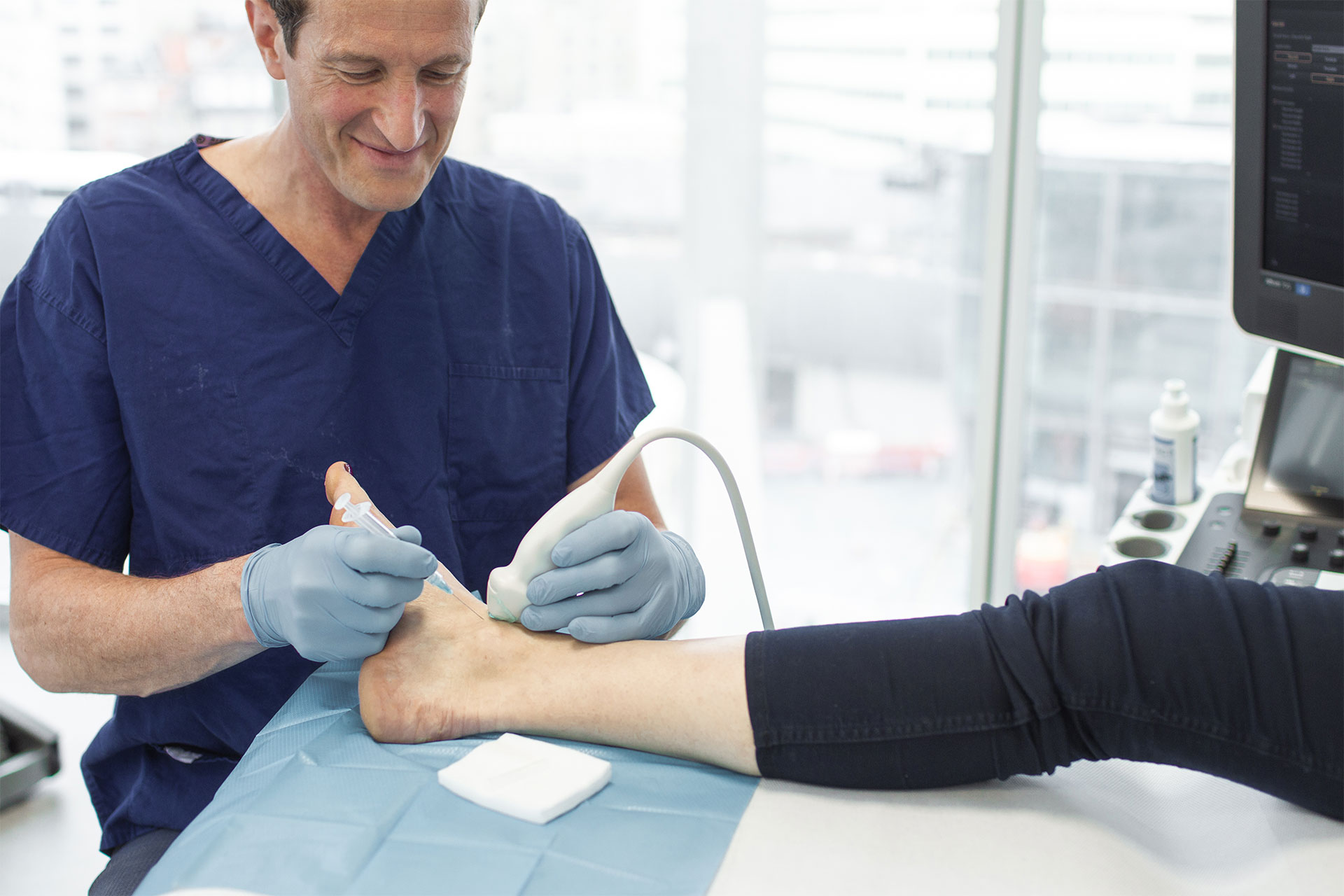
- Intra-articular injections, such as corticosteroids, to relieve pain and inflammation
Many patients experience improvement with these measures, particularly in early-stage osteoarthritis.
Surgical options of ankle OA
When conservative management is insufficient, surgical options may be considered.
These include:
- Ankle arthroscopy Minimally invasive surgery to clean the joint and remove loose fragments; suitable for early OA with limited cartilage damage.
- Ankle realignment surgery (osteotomy) Corrects deformity to offload damaged areas of the joint.
- Ankle fusion (arthrodesis) Fuses the bones of the ankle joint to relieve pain; highly successful for pain relief and long-term stability, though movement is reduced.
- Total ankle replacement (arthroplasty)
Replaces the damaged joint with a prosthesis, preserving some movement while relieving pain; outcomes have improved significantly with modern implants.
At London Bridge Orthopaedics, surgical decisions are guided by careful assessment, patient goals, and realistic expectations. Most patients achieve significant pain relief, improved function, and enhanced quality of life following surgery.
Recovery and outcomes
Recovery depends on the type of surgery performed:
- Arthroscopy: Typically allows faster return to activity, with mild restrictions for a few weeks.
- Ankle fusion: Walking aids may be required for several weeks; most patients regain pain-free stability for daily activities.
- Ankle replacement: Recovery may take several months, but many patients regain mobility and return to low-impact sports and normal walking.
Surgical outcomes are generally very positive, with high satisfaction rates, especially when combined with physiotherapy and structured rehabilitation.
FAQs
How do I know if I need surgery for ankle osteoarthritis?
Surgery is considered when conservative measures such as physiotherapy, orthotics, and injections no longer relieve your pain or improve mobility. Your specialist will assess your joint damage, activity levels, and lifestyle goals to recommend the most suitable procedure.
What is the difference between ankle fusion and ankle replacement?
Ankle fusion permanently joins the bones of the ankle, providing pain relief and stability but reducing movement. Ankle replacement replaces the damaged joint with a prosthesis, reducing pain while preserving some range of motion. Both procedures have excellent outcomes in appropriately selected patients.
How long is recovery after ankle surgery?
Recovery depends on the procedure. Arthroscopy often allows return to activity within weeks, ankle fusion requires 6–12 weeks of protected weight-bearing, and ankle replacement may take 3–6 months. Physiotherapy is essential to optimise outcomes.
Can ankle osteoarthritis be managed without surgery?
Yes, early-stage ankle OA often responds to conservative treatment, including physiotherapy, activity modification, supportive footwear, and injections. Surgery is reserved for persistent pain or reduced function despite these measures.
What outcomes can I expect after ankle surgery?
Most patients experience significant pain relief, improved mobility, and better quality of life. Modern surgical techniques have excellent long-term results, particularly when combined with a structured rehabilitation programme.