If you have pain on the thumb side of your wrist, particularly when gripping, lifting or moving your thumb, you may have a condition calledDe Quervain’s tenosynovitis.
De Quervain’s affects two of the tendons that move the thumb as they pass through a small tunnel, or tendon sheath, at the wrist.
When movement within this space becomes restricted, everyday activities such as picking up a child, opening a jar, using your phone or lifting objects can become surprisingly painful.
The condition can often be treated successfully without surgery.
Treatment may include modifying aggravating activities, splinting and a corticosteroid injection. For persistent symptoms that do not respond to conservative treatment, a small surgical procedure can release the affected tendon compartment.
What is De Quervain’s tenosynovitis?
Two tendons involved in moving the thumb – the abductor pollicis longus (APL) and extensor pollicis brevis (EPB) – pass through a tunnel on the thumb side of the wrist known as the first dorsal extensor compartment.
In De Quervain’s tenosynovitis, thickening and narrowing around this tendon compartment can restrict the smooth movement of the tendons.
Despite the name “tenosynovitis”, the condition is not necessarily simply an inflammatory problem. Changes and thickening within the tendon sheath appear to play an important role.
The result is characteristic pain and tenderness around the thumb side of the wrist.
What causes De Quervain’s?
There is not always one identifiable cause.
Symptoms can develop after an increase in activities involving repeated thumb movement, gripping or wrist loading. This may include work, sport, hobbies or changes in everyday activities.
De Quervain’s is also commonly associated with pregnancy and the postnatal period. New parents frequently notice pain when lifting or holding their baby, although hormonal and fluid changes may also contribute to the condition.
Anatomical differences in the tendon compartment can also affect how the tendons move and may be relevant in some patients.
What are the symptoms of De Quervain’s?
The main symptom is pain on the thumb side of the wrist, usually around the bony prominence at the end of the radius.
You may experience:
- pain at the base of the thumb and wrist
- tenderness or swelling
- pain when gripping or pinching
- discomfort when twisting the wrist
- pain when lifting objects
- pain when picking up a baby or young child
- difficulty with repetitive thumb movements.
Pain can sometimes extend further up the forearm.
For some patients the symptoms are relatively mild, while others find that even simple everyday activities become difficult.
How is De Quervain’s diagnosed?
De Quervain’s can usually be diagnosed from your symptoms and a clinical examination.
Your consultant will examine the thumb and wrist and identify where the tenderness is located. Specific movements or clinical tests that place the affected tendons under tension may reproduce your symptoms.
Imaging is not always required.
However, ultrasound can be useful when the diagnosis is uncertain, symptoms are persistent or an injection is being considered. It can show the tendons and tendon sheath and identify anatomical variations, such as separate tendon compartments, that may influence treatment.
Other causes of pain around the thumb and wrist, including thumb-base arthritis,intersection syndrome, ganglion cysts and certain other wrist injuries, may produce similar symptoms, so establishing the correct diagnosis is important.
How is De Quervain’s treated?
Treatment depends on the severity and duration of your symptoms.
Reducing or temporarily modifying movements that repeatedly aggravate the tendons can help settle symptoms. A thumb-spica splint, which supports the wrist and thumb, may also be recommended.
Treatment may therefore include:
- activity modification
- temporary splinting
- hand therapy
- appropriate pain relief
- corticosteroid injection.
The aim is not simply to rest the wrist indefinitely, but to reduce irritation sufficiently to allow comfortable movement and a gradual return to normal activity.
Do steroid injections work for De Quervain’s?
Corticosteroid injection is an effective treatment for many patients with De Quervain’s tenosynovitis.
The medication is injected around the affected tendon sheath with the aim of reducing symptoms and allowing the tendons to move more comfortably.
An injection may be combined with a period of thumb-spica splinting.
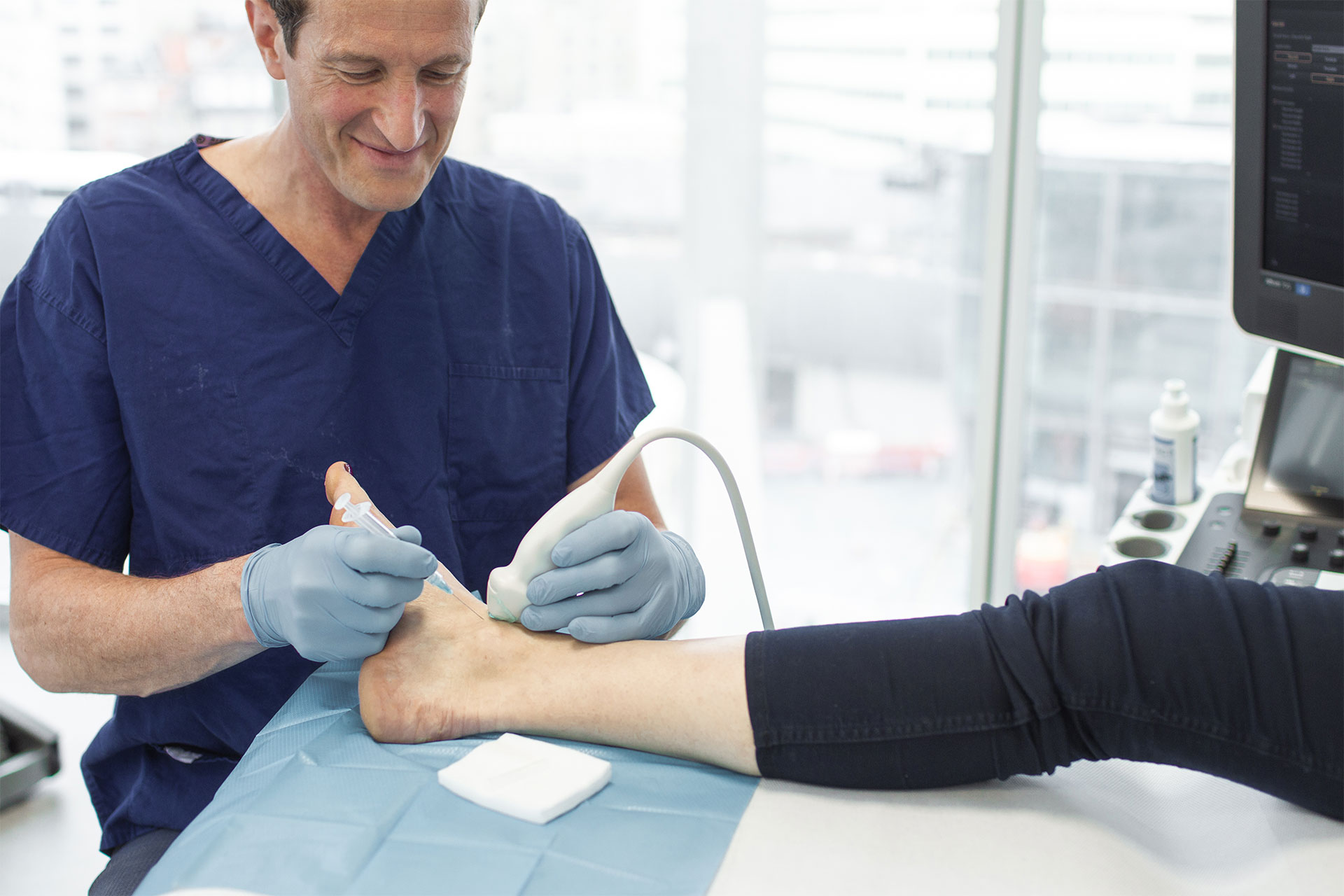
For some patients, ultrasound guidance may be useful. Ultrasound allows the clinician to visualise the tendons and accurately place the injection within the appropriate tendon compartment. This can be particularly helpful where there are anatomical variations or separate tendon subcompartments.
Your specialist can advise whether an injection is appropriate for you and whether ultrasound guidance would be beneficial.
When is surgery considered?
Most patients do not require surgery.
However, if symptoms remain troublesome despite appropriate non-surgical treatment, your hand and wrist surgeon may discuss De Quervain’s release surgery.
The procedure involves releasing the tight tissue forming the roof of the first dorsal extensor compartment. This creates more space for the affected tendons to glide freely.
It is important that any separate tendon compartments are identified and adequately released, while protecting nearby structures such as the superficial radial nerve.
Your surgeon will discuss the potential benefits and risks of the procedure before deciding whether surgery is appropriate.
What is recovery like after De Quervain’s surgery?
De Quervain’s release is usually performed as a relatively small hand procedure.
After surgery, you will be encouraged to gradually regain movement of the thumb and wrist while the wound heals. The time required to return to work, sport and heavier activities depends on the demands placed on your hand.
Some temporary tenderness or swelling around the surgical site is normal during the early stages of recovery.
Specialist hand therapy may be recommended if additional help is required to restore movement, strength and function.
De Quervain’s after pregnancy and childbirth
De Quervain’s is particularly common during pregnancy and the months after having a baby.
Caring for a young baby involves repeated lifting and gripping, often with the wrist angled towards the little-finger side while the thumb supports the baby’s head or body. These positions can aggravate an already sensitive tendon compartment.
It is sometimes referred to informally as “mother’s wrist” or “mummy thumb”, although the condition can of course affect any parent or carer.
Small changes to lifting technique can reduce repeated strain on the thumb and wrist, while splinting or other treatment may be appropriate when symptoms are persistent.
When should I see a hand and wrist specialist?
If pain on the thumb side of your wrist is persisting, worsening or interfering with work, childcare, exercise or everyday activities, it is worth seeking assessment.
Not all pain in this area is caused by De Quervain’s, and getting the diagnosis right helps ensure that treatment is directed at the correct structure.
At London Bridge Orthopaedics, our specialist hand and wrist consultants can assess your symptoms and discuss treatment options ranging from conservative management and injections through to surgery where required.
Frequently Asked Questions
Where is De Quervain’s pain felt?
Pain is usually felt on the thumb side of the wrist, around the base of the thumb. It may become worse when gripping, lifting, twisting the wrist or repeatedly moving the thumb.
Why is De Quervain’s common after having a baby?
Pregnancy-related changes may contribute, while caring for a baby involves frequent lifting and repetitive thumb and wrist movements. The combination can make De Quervain’s particularly common during the postnatal period.
Can De Quervain’s go away without treatment?
Milder symptoms may settle with changes to aggravating activities, but persistent symptoms may benefit from splinting, injection treatment or other specialist management.
Does a steroid injection help De Quervain’s?
Corticosteroid injections can provide significant symptom relief for many patients. Current evidence supports corticosteroid injection as an effective treatment, often combined with a short period of thumb-spica immobilisation.
Is an ultrasound-guided injection better for De Quervain’s?
Ultrasound allows the clinician to see the tendon compartment and position the injection accurately. Research suggests ultrasound-guided corticosteroid injection may provide better pain outcomes than conventional landmark-guided injection, although the most appropriate approach depends on the individual patient.
When do you need surgery for De Quervain’s?
Surgery is generally considered when significant symptoms persist despite appropriate non-surgical treatment. The procedure releases the tight tendon compartment to allow the tendons to glide more freely.