Pain on the little-finger side of your wrist can have several causes, but one important possibility is an injury to the triangular fibrocartilage complex (TFCC).
The TFCC is a group of cartilage and ligaments that helps support and stabilise the wrist. It can be injured suddenly following a fall, twisting movement or sporting injury, or become damaged gradually through repetitive loading and wear.
Some TFCC injuries settle successfully with a period of activity modification, splinting and specialist rehabilitation. Others can cause persistent pain, clicking or wrist instability and may require further treatment.
At London Bridge Orthopaedics, our specialist hand and wrist consultants can assess the cause of your wrist pain, arrange appropriate imaging and recommend treatment based on the type of TFCC injury and the demands you place on your wrist.
What is the TFCC?
The triangular fibrocartilage complex is located on the ulnar side of the wrist – the side closest to your little finger.
Rather than being one individual structure, it is a complex of cartilage and ligaments that helps stabilise the relationship between the radius and ulna at the wrist and provides support when the hand is gripping, rotating or taking weight.
The TFCC acts partly as a stabiliser and load-bearing structure, which means it can be placed under considerable stress during sport, manual work and everyday activities.
What causes a TFCC injury?
TFCC injuries can be broadly divided into traumatic injuries and degenerative injuries.
Traumatic TFCC injuries
An acute TFCC tear may occur when significant force passes through the wrist. Common examples include:
- falling onto an outstretched hand
- forcefully twisting the wrist
- a sporting injury
- suddenly loading the wrist
- a racket or club twisting forcefully in the hand.
Sports involving repetitive wrist rotation or significant loading through the hand can place particular demands on the TFCC.
Degenerative TFCC injuries
The TFCC can also gradually change over time. Repetitive loading and normal age-related changes may make the tissue more vulnerable to injury.
The anatomy of the wrist can also influence how much load passes through the TFCC.
Some people naturally have a relatively longer ulna – known as positive ulnar variance – which can increase loading on structures on the ulnar side of the wrist.
What does a TFCC injury feel like?
The most characteristic symptom is pain on the little-finger side of the wrist, sometimes described as ulnar-sided wrist pain.
You may notice pain when:
- twisting the wrist or forearm
- turning a door handle or key
- opening a jar
- gripping firmly
- lifting a heavy object
- pushing yourself up from a chair
- putting weight through your hand
- playing racket, bat or club sports.
Some patients also experience clicking, catching or a feeling of instability within the wrist.
Symptoms vary considerably depending on the type and location of the TFCC injury. Some tears seen on scans cause relatively few symptoms, so imaging findings always need to be considered alongside your history and clinical examination.
How is a TFCC injury diagnosed?
Diagnosing the cause of ulnar-sided wrist pain can be challenging because several bones, tendons and ligaments are located within a relatively small area.
Your consultant will ask how your symptoms started and examine the movement, strength and stability of your wrist. Specific clinical tests can help determine whether the TFCC is likely to be involved.
X-rays
X-rays do not show the TFCC itself, but they provide useful information about the bones and alignment of the wrist. They can also help identify fractures, arthritis and variations in wrist anatomy that may contribute to symptoms.
MRI
An MRI scan may be recommended to look more closely at the TFCC and surrounding soft tissues.
MRI findings need to be interpreted carefully because changes within the TFCC can sometimes be present in people who have no wrist pain.
Wrist arthroscopy
In selected patients, wrist arthroscopy may be used to assess the structures inside the wrist directly. Arthroscopy can sometimes allow the surgeon to diagnose and treat a TFCC injury during the same procedure.
Can a TFCC tear heal without surgery?
Yes. Not every TFCC injury requires surgery.
Many wrist injuries can initially be managed conservatively, particularly where there is no significant instability.
Treatment may include:
- temporarily avoiding activities that aggravate the wrist
- a wrist splint or brace
- pain relief where appropriate
- specialist hand therapy or physiotherapy
- progressive strengthening and rehabilitation.
The amount of time required for recovery varies according to the type of injury, how long symptoms have been present and the activities you want to return to.
For athletes, rehabilitation should ultimately include a gradual return to the loading, gripping and rotational movements required for their particular sport.
Are injections used for TFCC injuries?
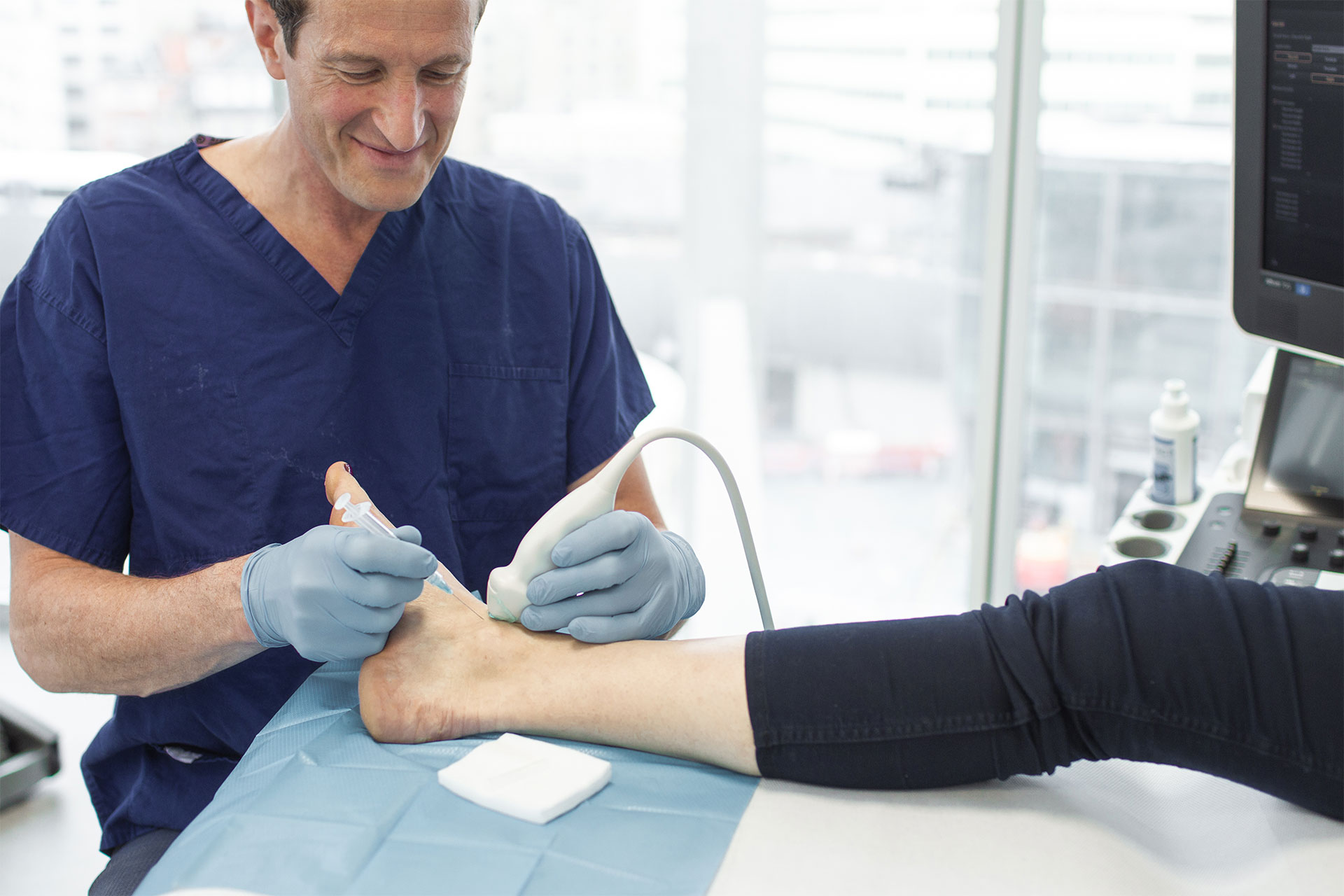
In selected patients, an injection may be considered as part of non-surgical treatment, particularly when pain is preventing progress with rehabilitation.
An injection does not mechanically repair a significant TFCC tear or restore an unstable wrist, however. Its role depends on the underlying cause of the symptoms.
Your consultant can advise whether injection treatment is appropriate after assessing the wrist and reviewing any relevant imaging.
When might a TFCC injury require surgery?
Surgery may be considered when symptoms remain troublesome despite appropriate non-surgical treatment or where an injury is causing significant instability.
The type of surgery depends on where and how the TFCC has been damaged.
Some tears can be treated by removing or smoothing unstable damaged tissue – known as arthroscopic debridement.
Other TFCC tears, particularly those involving important stabilising attachments, may be suitable for surgical repair.
The anatomy of the wrist and any associated instability or excessive loading through the ulnar side of the wrist also need to be considered when deciding on treatment.
Your hand and wrist surgeon will explain the nature of your injury and whether surgery is likely to provide a meaningful benefit.
What is recovery like after TFCC surgery?
Recovery depends on the procedure performed.
Following a TFCC repair, the wrist and sometimes forearm may need to be protected for a period while the repaired tissue heals. Specialist hand therapy then helps gradually restore movement, strength and function.
Return to heavy manual work, weight training and sport generally takes longer than return to lighter everyday activities.
Your rehabilitation programme will be tailored to the injury, surgical procedure and activities you want to return to.
TFCC injuries in sport
TFCC problems can be particularly frustrating for athletes because many sporting movements combine gripping, wrist rotation and loading.
They may occur in racket sports, golf, gymnastics and other sports that place repetitive or sudden forces through the wrist.
Treatment should therefore consider more than pain alone. For an athlete, the wrist needs to tolerate the specific forces involved in their sport before a full return to training and competition.
When should I see a hand and wrist specialist?
Consider seeking specialist assessment if you have persistent pain on the little-finger side of the wrist, particularly if it started following an injury or is associated with clicking, weakness or instability.
You should also consider assessment if wrist pain is preventing you from working, exercising or playing sport despite rest and rehabilitation.
At London Bridge Orthopaedics, our hand and wrist specialists can establish whether your symptoms are coming from the TFCC or another structure and advise on the most appropriate treatment.
Frequently Asked Questions
Where do you feel pain from a TFCC injury?
TFCC pain is usually felt on the little-finger, or ulnar, side of the wrist. It may become more noticeable during gripping, twisting or weight-bearing through the hand.
Can a TFCC tear heal by itself?
Some TFCC injuries improve successfully without surgery. The likelihood of healing and recovery depends on the location and type of tear, wrist stability and other individual factors.
How do you test for a TFCC tear?
Diagnosis involves examining the wrist and performing specific clinical tests. X-rays and MRI may also be recommended. In selected cases, wrist arthroscopy can provide direct assessment of the TFCC.
Can I exercise with a TFCC injury?
This depends on the injury. Activities that repeatedly reproduce wrist pain or place substantial load through the affected area may need to be modified initially. Rehabilitation then progressively increases loading as symptoms and function improve.
Does a TFCC tear always need surgery?
No. Many TFCC injuries are initially treated without surgery. Surgery is more likely to be considered for persistent symptomatic tears, significant instability or injuries that have not responded to appropriate conservative treatment.
How long does a TFCC injury take to recover?
Recovery varies considerably according to the injury and treatment required. Minor injuries may improve with conservative treatment, while recovery following a TFCC repair is longer because the repaired tissue needs time to heal before heavier loading and sport are reintroduced.