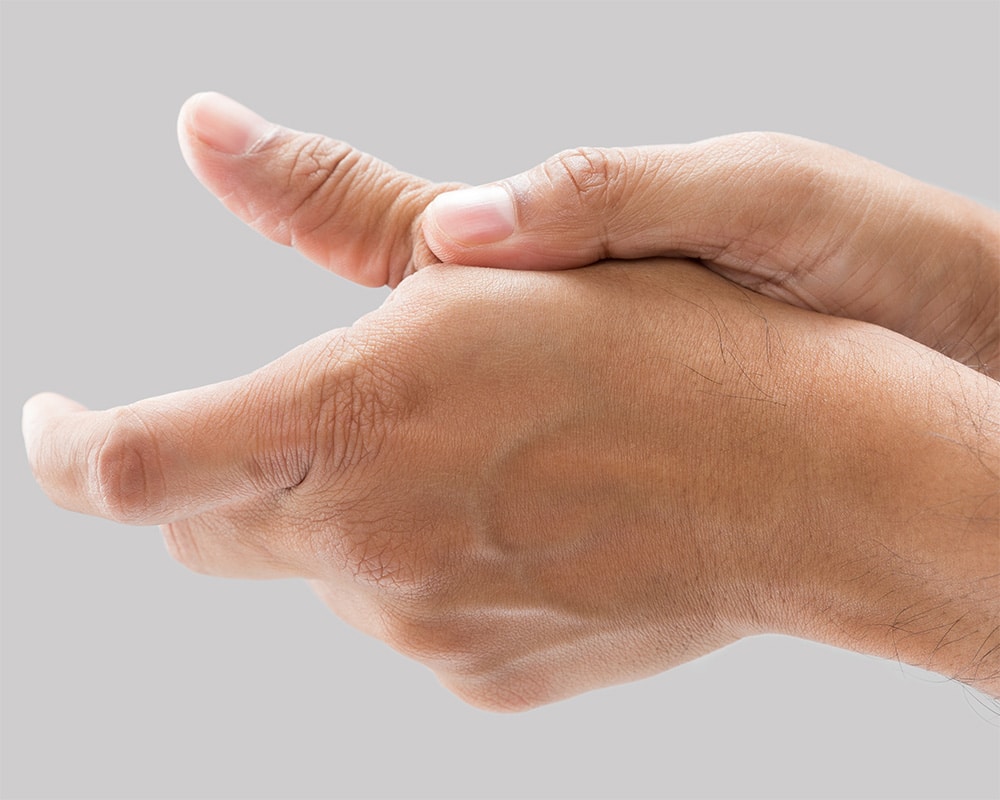
Thumb arthritis, also known as carpometacarpal (CMC) joint arthritis or basal joint arthritis, is a common degenerative condition affecting the joint at the base of the thumb.
This joint is essential for gripping, pinching, writing, buttoning clothes, and many everyday tasks. When arthritis develops in this area, it can significantly affect hand function and quality of life.
The condition occurs when the cartilage that protects the joint gradually wears away, leading to pain, stiffness, swelling, and reduced mobility. While symptoms may start gradually, thumb arthritis can progress to the point where even simple daily tasks become challenging.
At London Bridge Orthopaedics, we offer a full spectrum of treatment options, from early conservative management to advanced surgical procedures – including total thumb joint replacement – for patients with persistent pain or advanced degeneration.
Anatomy and Function
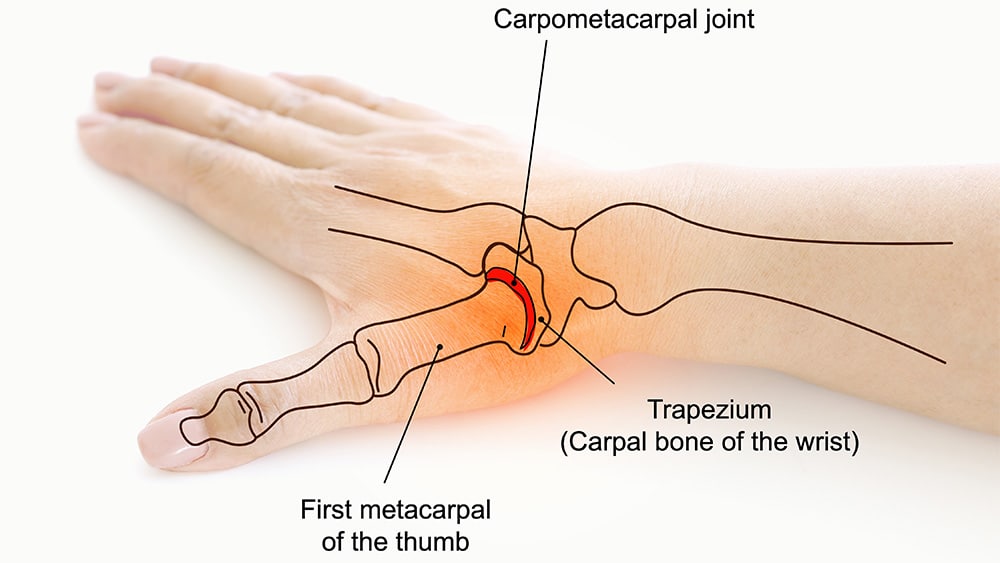
The thumb CMC joint is formed between the base of the first metacarpal bone and the trapezium bone in the wrist. This saddle-shaped joint allows a wide range of motion, including rotation, opposition (touching the thumb to the fingers), and precise pinch movements.
Cartilage tissue cushions the joint surfaces and allows smooth, pain-free movement. As this cartilage degenerates, the joint becomes inflamed and painful, often leading to reduced function.
Causes of Thumb Arthritis
The most common type is osteoarthritis, caused by gradual wear-and-tear. However, other factors may contribute:
Previous thumb injury or fracture
Repetitive activities that require forceful pinching or gripping
Joint hypermobility
Family history of osteoarthritis
Age-related cartilage changes
Women over the age of 50 are particularly susceptible, likely due to hormonal, anatomical and factors.
Who Is Most Susceptible?
Thumb arthritis is more common in:
Individuals aged over 50
Women, particularly around and after menopause
People with manual or repetitive occupations (hairdressers, musicians, dentists, physical therapists)
Those with inflammatory conditions such as rheumatoid arthritis
Individuals with loose or unstable joints
Signs and Symptoms
Common symptoms include:
Pain at the base of the thumb, especially during gripping or pinching
Swelling and tenderness around the joint
Stiffness or difficulty performing fine movements
Reduced grip strength
A grinding or clicking sensation during movement (crepitus)
Visible deformity at the base of the thumb in later stages
Symptoms often worsen over time if not treated appropriately.
Assessment and Diagnosis
Diagnosis begins with a detailed clinical examination and symptom history. A consultant will assess joint tenderness, stability, movement, and functional strength.
Special Tests
Grind Test: reproduces pain and grinding at the CMC joint
Functional Assessment: simulating daily movement tasks
Imaging
X-rays are typically used to confirm cartilage loss and osteoarthritis severity.
Ultrasound may be used to assess ligament involvement or joint inflammation.
MRI is occasionally used when symptoms do not match X-ray findings or when ruling out other conditions.
Treatment and Management
Treatment depends on severity, lifestyle demands, and the stage of arthritis.
Conservative (Non-Surgical) Management
Mild to moderate symptoms often respond well to:
Activity modification to reduce forceful pinch movements
Splinting or braces to support the joint during flare-ups or activity
Pain relief medication or anti-inflammatories when appropriate
Hand therapy including exercises to improve joint stability, strengthen surrounding muscles, and maintain movement
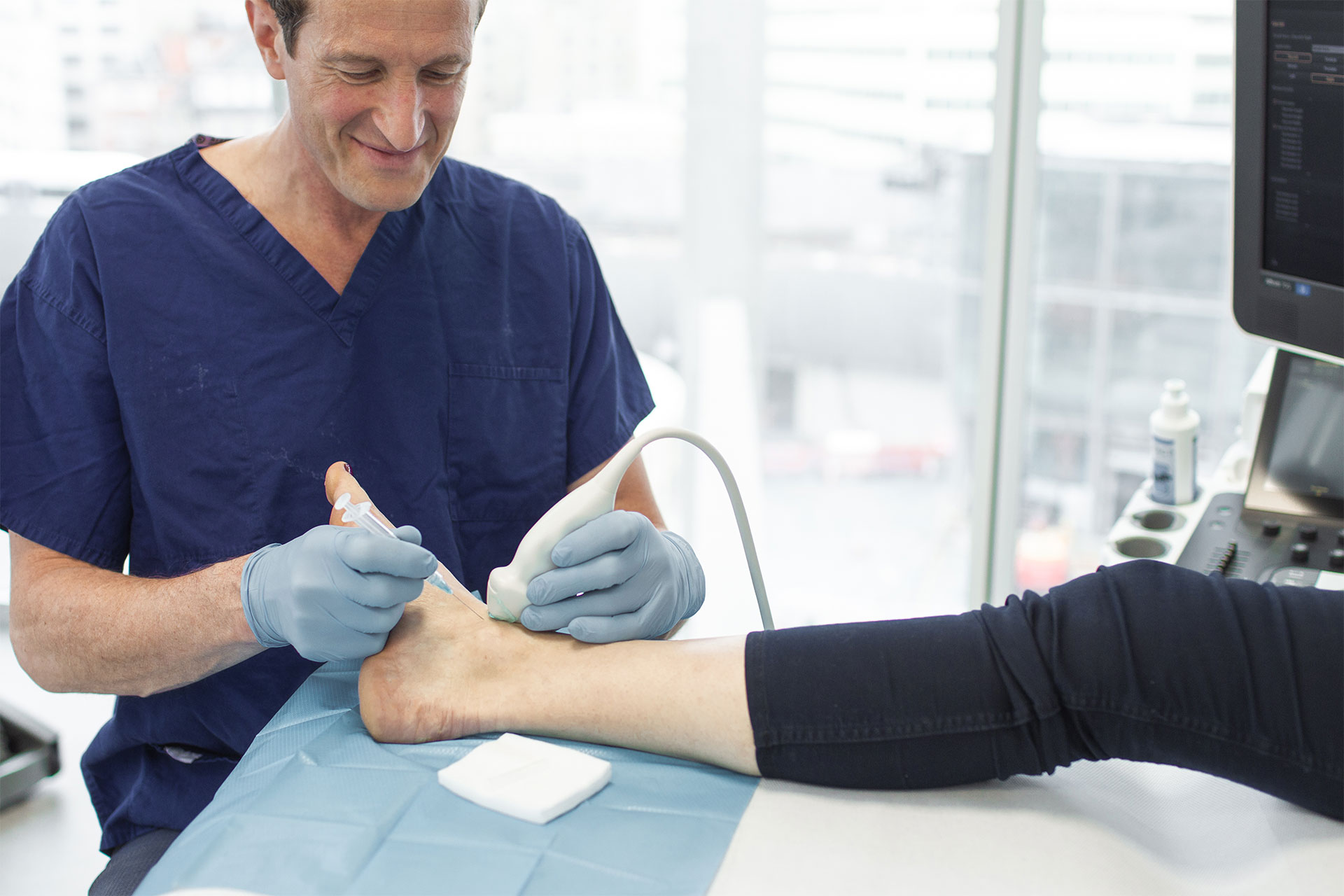
Corticosteroid injections to reduce inflammation and pain for temporary relief
Hand therapy plays a central role in helping patients regain function, reduce pain, and optimise joint mechanics during both early and late stages of the disease.
Surgical Options
At LBO our consultants will only consider surgical intervention, once conservative management has failed and when pain, reduced function and reduced quality of life becomes significant.
Options include:
1. Ligament Reconstruction and Tendon Interposition (LRTI)
A commonly used procedure where damaged joint surfaces are removed and a tendon graft is used to stabilise the joint and preserve grip and pinch strength.
2. Trapeziectomy
Removal of the trapezium bone to eliminate bone-on-bone contact. This may be performed alone or combined with tendon reconstruction.
3. Fusion (Arthrodesis)
The joint is fused to eliminate movement and pain. This may be used for younger or high-demand patients but sacrifices mobility.
Total Thumb Joint Replacement (Arthroplasty)
Total thumb joint replacement is an increasingly popular treatment for advanced CMC arthritis. The procedure involves replacing the damaged joint surfaces with a prosthetic implant designed to mimic natural movement while reducing pain.
Who Benefits Most?
Thumb replacement is most suitable for:
Patients with advanced arthritis with significant pain
Individuals who require fine dexterity or pinch strength for work or hobbies
Patients who have failed conservative therapy
Those wishing to maintain mobility rather than undergo fusion
It may be less suitable for heavy manual labourers, as high loading may affect implant longevity.
Recovery and Rehabilitation
Following surgery, the hand is usually immobilised in a splint for a short period. Structured rehabilitation with a hand therapist gradually restores movement, pinch strength, and function.
Most patients return to normal daily activity within 8 – 12 weeks, although full strength may continue improving for up to six months.
Outcomes
Studies show excellent long-term outcomes with significant pain reduction and improved movement. Most patients regain functional pinch, precision, and grip strength, allowing them to resume activities previously limited by pain.
Prognosis
With early diagnosis and appropriate conservative treatment, many patients achieve significant symptom relief and maintain good hand function.
Surgical intervention, including thumb replacement, provides reliable outcomes for those with advanced disease or persistent symptoms that haven’t responded to conservative measures.
Frequently Asked Questions
Is thumb arthritis permanent? Yes, it is a degenerative condition, but symptoms can be managed very effectively with treatment.
Do I always need surgery? No. Many patients improve with splints, injections, and hand therapy. Surgery is typically reserved for persistent symptoms.
How long does recovery take after thumb replacement? Initial recovery takes around 8–12 weeks, with full strength returning over several months.
Will my thumb be as strong as before? Most patients experience improved comfort and function. Strength improves significantly after surgery but may not fully return to pre-arthritis levels.
When should I see a specialist? If pain interferes with daily activity or persists beyond six weeks despite conservative treatment, specialist assessment is recommended.
References
Vermeulen, G.M., Brink, S.M., Sluiter, J.K., Elias, S.G., Hovius, S.E.R. and Moojen, T.M. (2011) ‘Trapeziometacarpal arthroplasty: operative techniques and patient outcomes’, Journal of Hand Surgery, 36(1), pp. 130–136.
National Institute for Health and Care Excellence (NICE) (2024) Osteoarthritis: assessment and management. Available at: https://www.nice.org.uk (Accessed 3 December 2025).
Srinivasan, R. and Matthews, P.N. (2020) ‘Thumb CMC arthroplasty versus fusion: a comparative review’, Journal of Orthopaedic Surgery and Research, 15(112), pp. 1–9.
London’s Leading Specialist Orthopaedic Consultants
We are a group of established consultants who care about our patients. We cover all the subspecialty areas of orthopaedics:
Up to 40% of ankle sprains develop persistent symptoms. Learn how to identify the commonly missed diagnoses, clinical examination techniques, red flags and appropriate referral pathways for chronic ankle pain.