Not Sure What Is Causing Your Shoulder or Elbow Pain?
Shoulder and elbow conditions can produce very similar symptoms. Pain when lifting the arm, for example, may be associated with the rotator cuff, bursa, AC joint, arthritis or another structure within the shoulder.
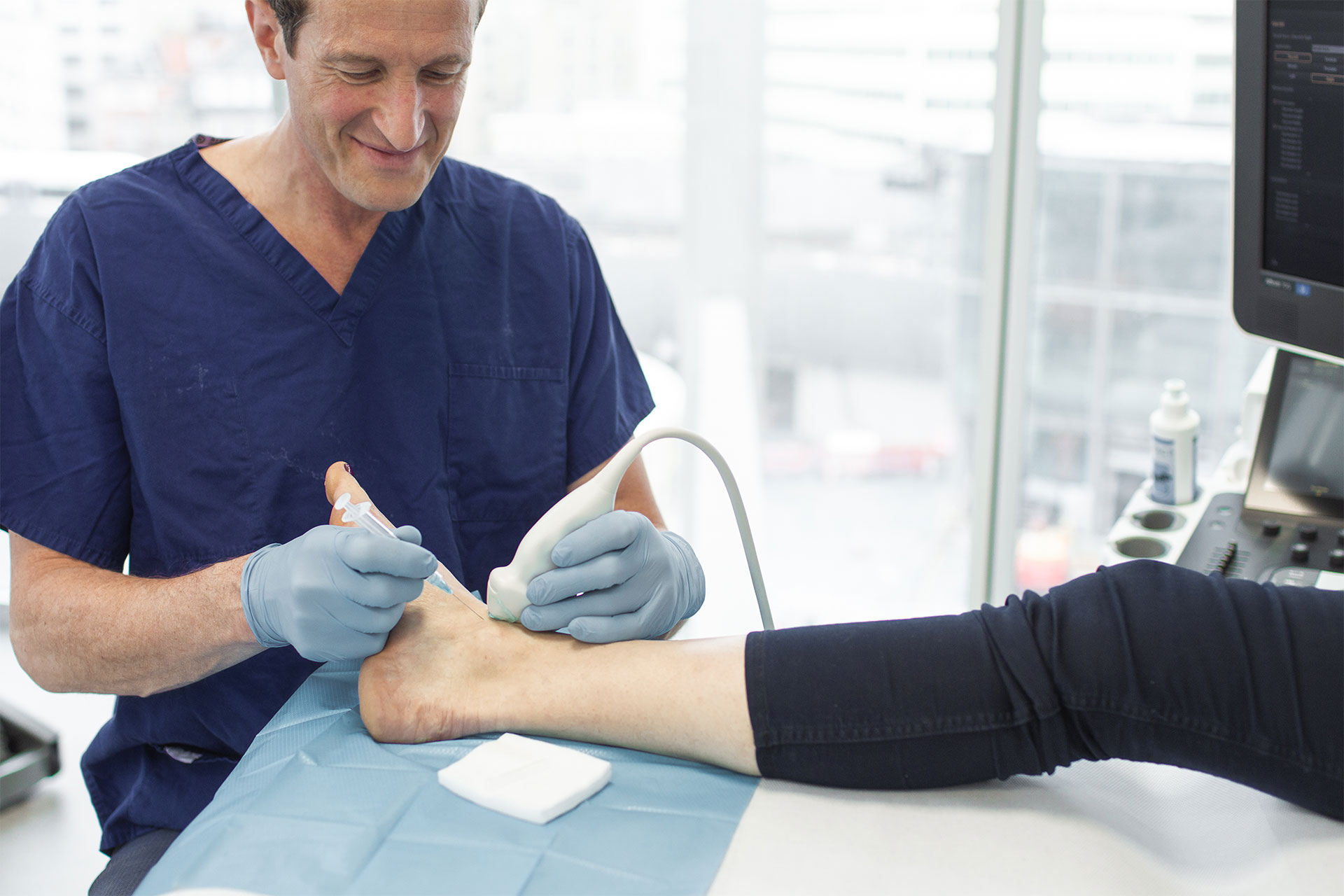
A specialist assessment can help establish the cause of your symptoms and determine whether further investigation is required. At London Bridge Orthopaedics, our shoulder and elbow consultants have access to diagnostic imaging including X-ray, ultrasound and MRI, allowing diagnosis and treatment planning to be coordinated efficiently.
Our aim is not simply to identify what is causing your pain, but to find the treatment approach that is most appropriate for you, your lifestyle and the activities you want to return to.
Shoulder and elbow problems can affect almost every aspect of everyday life; from getting dressed or reaching into a cupboard to working, exercising and playing sport.
Symptoms may develop gradually through overuse or wear and tear, or begin suddenly following an injury.
At London Bridge Orthopaedics, our specialist shoulder and elbow consultants diagnose and treat a wide range of upper limb conditions, from common tendon problems and sports injuries to fractures, arthritis and complex shoulder conditions.
Below are some of the shoulder and elbow conditions we commonly treat.
Shoulder Dislocation
A shoulder dislocation occurs when the ball at the top of the upper arm bone comes out of its socket. It commonly follows a fall, collision or sporting injury and can cause sudden severe pain, deformity and an inability to move the arm normally.
Once the shoulder has been put back into position, further assessment may be recommended to identify damage to the surrounding ligaments, labrum, bone or rotator cuff. Some people recover well with rehabilitation, while recurrent instability or significant associated injuries may require surgery.
Find out more about shoulder dislocation
Tennis Elbow
Despite its name, you do not have to play tennis to develop tennis elbow (lateral epicondylitis). It is a common condition affecting the tendons on the outside of the elbow and is usually associated with repeated gripping, lifting or wrist movements.
Pain is typically felt around the outer elbow and may become worse when gripping an object, carrying shopping, using tools or playing racket sports.
Most cases can be managed without surgery using activity modification and a structured rehabilitation programme. Other treatments may be considered when symptoms persist.
Find out more about tennis elbow
Golfer’s Elbow
Golfer’s elbow (medial epicondylitis) affects the tendons attaching to the inside of the elbow. Like tennis elbow, it is not restricted to people who play sport and can develop following repetitive gripping, lifting or wrist movements.
Patients commonly experience tenderness or pain on the inside of the elbow, which may extend into the forearm. Symptoms can interfere with work, exercise and everyday activities involving gripping.
Treatment usually begins conservatively and may include modifying aggravating activities and physiotherapy to gradually restore tendon strength and function.
Find out more about golfer’s elbow
Frozen Shoulder
Frozen shoulder, or adhesive capsulitis, causes progressive pain and stiffness in the shoulder joint. Everyday movements such as reaching overhead, fastening clothing, putting on a coat or sleeping comfortably can become increasingly difficult.
The condition usually develops in stages and can take many months to resolve. Treatment depends partly on the stage of the condition and may include pain relief, carefully tailored physiotherapy and injections. In a small number of persistent cases, surgical treatment may be considered.
An accurate diagnosis is important because other shoulder conditions, including rotator cuff problems and arthritis, can cause similar symptoms.
Find out more about frozen shoulder
Rotator Cuff Tears
The rotator cuff is a group of muscles and tendons that help stabilise the shoulder and control movement. Tears can occur suddenly following an injury or develop gradually as the tendons change with age and repeated use.
Symptoms may include shoulder pain, night pain, weakness and difficulty lifting or rotating the arm. However, the severity of symptoms does not always correspond to the size of a tear.
Ultrasound or MRI may be used alongside clinical assessment to investigate the rotator cuff. Treatment ranges from physiotherapy and activity modification to surgical repair, depending on factors such as the type of tear, symptoms, age, activity levels and loss of function.
Find out more about rotator cuff tears
Elbow Bursitis
Olecranon bursitis occurs when the small fluid-filled sac over the point of the elbow becomes inflamed and swollen. It may develop following a direct knock, repeated pressure on the elbow, an underlying inflammatory condition or, occasionally, infection.
The most noticeable symptom is usually a soft swelling over the back of the elbow. It may be relatively painless or become tender, warm and red.
Treatment depends on the cause and severity. Many cases settle with simple measures such as avoiding pressure on the elbow, while aspiration or other treatment may be appropriate in selected cases. Suspected infection requires prompt medical assessment.
Find out more about elbow bursitis
Shoulder Impingement and Rotator Cuff-Related Shoulder Pain
Pain around the rotator cuff and the space above it is a very common cause of shoulder symptoms, particularly during overhead movement. You may notice pain when reaching upwards or behind your back, exercising, lifting objects or lying on the affected shoulder.
Several factors can contribute, including irritation of the rotator cuff tendons or bursa, changes in shoulder mechanics and associated tendon problems. For this reason, establishing what is driving the symptoms is more useful than relying on symptoms alone.
Treatment is usually non-surgical and may involve activity modification, physiotherapy and, in selected cases, injection therapy. Further imaging or surgical assessment may be appropriate when symptoms persist or a significant rotator cuff injury is suspected.
Find out more about shoulder impingement syndrome
Shoulder and Elbow Arthritis
Osteoarthritis occurs when the surfaces of a joint gradually change and the protective cartilage becomes worn. It can affect both the shoulder and elbow, causing pain, stiffness, reduced movement and difficulty with everyday activities.
Treatment is tailored to the severity of the arthritis and how much it is affecting your quality of life. Non-surgical options can include activity modification, physiotherapy, medication and injections.
For more advanced arthritis that continues to cause significant pain or loss of function despite conservative treatment, surgery may be considered. Your consultant will discuss the available options based on the joint involved and your individual circumstances.
Find out more about shoulder arthritis or elbow arthritis
Shoulder and Elbow Fractures
Fractures affecting the shoulder, upper arm or elbow commonly occur following a fall, sporting injury or other trauma. Symptoms can include significant pain, swelling, bruising, reduced movement and difficulty using the arm.
The treatment required depends on which bone has been injured, whether the fracture has moved out of position and whether the surrounding joint or soft tissues have also been affected.
Some fractures can be managed without surgery using a sling or brace followed by rehabilitation. More complex or displaced fractures may require surgery to restore the position and stability of the bone and joint.
Find out more about shoulder and elbow fractures
AC Joint Osteoarthritis
The acromioclavicular (AC) joint is the small joint at the top of the shoulder where the collarbone meets the shoulder blade. Osteoarthritis in this joint can cause quite localised pain over the top of the shoulder, particularly when lifting the arm overhead or bringing it across the body.
AC joint arthritis may develop gradually with age and repeated loading or following a previous AC joint injury. It is particularly common in people whose sport or work involves repetitive overhead movement or heavy lifting.
Treatment may include activity modification, physiotherapy, medication or a targeted injection. When symptoms remain troublesome despite non-surgical treatment, surgery may be considered.
Find out more about AC joint osteoarthritis
AC Joint Dislocation
An acromioclavicular (AC) joint dislocation, sometimes called an AC joint separation, usually occurs following a fall or direct impact onto the point of the shoulder. It is particularly common in contact sports, cycling and activities where a fall onto the shoulder can occur.
The injury damages the ligaments that stabilise the joint between the collarbone (clavicle) and the top of the shoulder blade (acromion), causing shoulder pain, swelling and sometimes a visible bump over the top of the shoulder.
AC joint injuries vary considerably in severity. Many lower-grade injuries recover well without surgery, using a period of relative rest followed by physiotherapy and progressive rehabilitation. More significant dislocations may cause ongoing instability, pain or difficulty returning to sport or physical work, and surgery may be considered depending on the grade of injury and the individual patient.
Find out more about AC joint dislocation
See a Shoulder and Elbow Specialist in London
The London Bridge Orthopaedics shoulder and elbow team includes experienced upper limb surgeons Mr Simon Owen-Johnstone, Mr Joydeep Sinha and Mr Adel Tavakkolizadeh, providing specialist assessment and both surgical and non-surgical management of shoulder and elbow conditions.
If shoulder or elbow pain is limiting your work, sport, sleep or everyday activities, arrange an assessment with one of our specialists.
Call our new patient booking team on 020 3576 5296,
Monday to Friday, 9am–5pm, or book a consultation online.